


PACKAGE DELIVERY SCAMS: STAY ALERT FOR IMPOSTOR MESSAGES
Package delivery scams are a rapidly growing form of business impostor scams, where criminals impersonate legitimate delivery companies to steal personal information or money. These scams typically begin with an unexpected text, email or phone call claiming there’s a problem with a delivery, such as an incorrect address or unpaid fee. These phishing (impersonated) messages often include links or phone numbers that prompt recipients to disclose sensitive personal or financial information, or to pay fees or taxes under false pretenses. To appear credible, the messages contain well-known business names and logos. These links also may install malware — any software designed to cause damage or gain unauthorized access — to steal sensitive data.
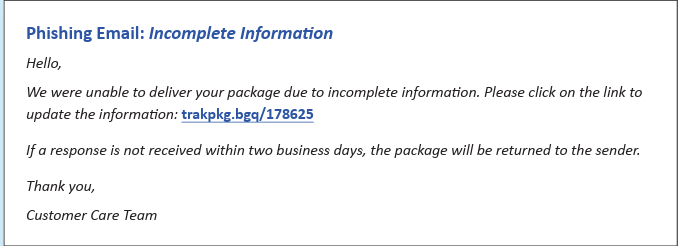
Criminals create a sense of urgency by warning that the package will be returned, or additional fees will apply if immediate action isn’t taken. These scams are especially effective because online shopping is so common that the messages seem plausible.
Legitimate delivery companies will not ask you for credit card details or passwords in an unsolicited text, email or phone call.
HOW TO PROTECT YOURSELF
- Don’t click on links in unsolicited messages
- Be cautious of scam indicators:
- Unexpected and urgent requests for payment to release a package
- Requests for personal or financial details (including card numbers)
- Links to suspicious or misspelled website or email addresses that mimic known delivery services
- Generic greetings or vague messages that don’t include your name or the sender’s identity
- Always verify tracking numbers directly with the legitimate courier service or retailer on its official website before taking any action
Report scams to the legitimate delivery service and to the Federal Trade Commission (FTC).
EXAMPLE OF PACKAGE DELIVERY SCAM MESSAGE
CONCLUSION: CUSTOMER BEWARE
Just because package deliveries have become so commonplace doesn’t mean we should be any less vigilant when looking for scam indicators. Be wary of companies that ask for credit card details, passwords or account information in an unsolicited email or text. It is most likely a scam.
To learn about other scams, and ways to protect yourself, visit https://netcreditunion.com/no-more-fraud/.
Recent Comments